Bandhavgarh: I Went Looking for a Tiger and Moved Into the Forest
There are places you visit. And then there are places that quietly rewrite you.
Bandhavgarh was never part of my life plan. It was a destination—once. A pin on a wildlife map.
The plan was simple:
See tiger.
Take photo.
Return to civilisation feeling superior.
Bandhavgarh had other ideas.
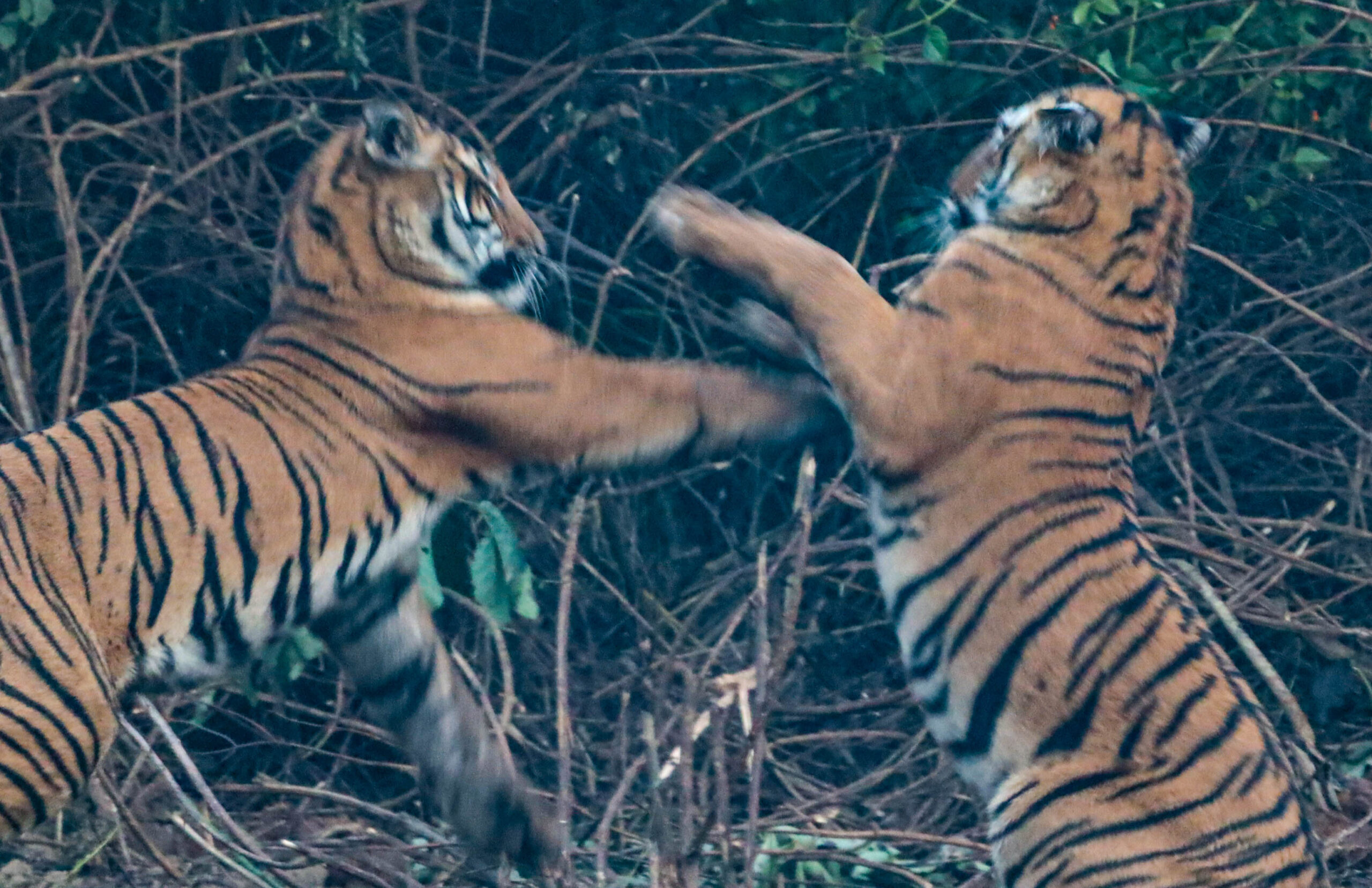
A forest known for its high density of tigers, ancient forts, sal trees standing like sentinels, and stories whispered through grasslands at dawn.
I arrived as a visitor. I stayed because the forest asked me to listen longer.
Beyond the Brochures
Bandhavgarh Tiger Reserve lies in the Vindhya ranges of Madhya Pradesh, spread across nearly 1,500 square kilometres of core and buffer forest. Dense sal woods, open meadows, rocky cliffs, seasonal streams—an ecosystem that feels intensely alive.
Yes, this is tiger country. But it is also land shaped by time.
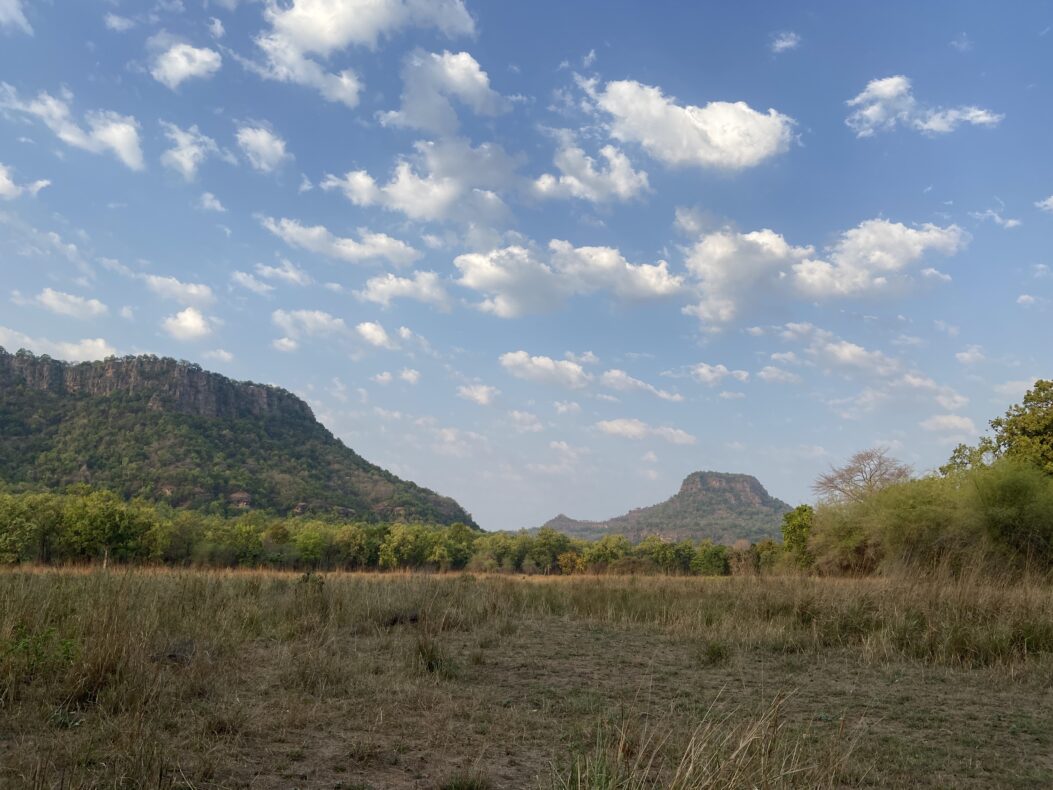
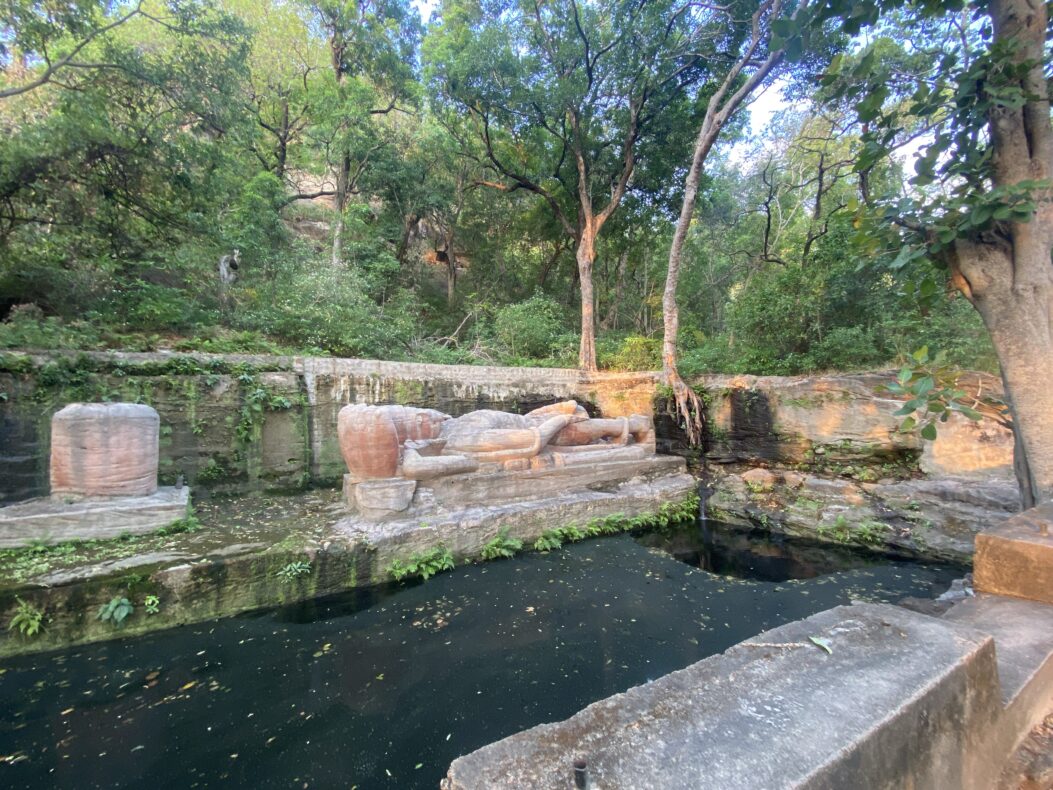
The Bandhavgarh Fort—over two thousand years old—crowns the highest hill, watching generations pass below. Leopards, deer, wild boar, jackals. Birds that migrate across continents and return with uncanny precision. The forest breathes continuity.
Still, none of this explains why someone would uproot a city life and choose to belong here.
That story is personal.
2022 — The First Encounter
My first visit to Bandhavgarh was in 2022.
I saw more tigers here than in any other reserve I’d visited—which was thrilling and, briefly, excellent for my ego.
Like most people, I arrived on a mission.
Early morning safaris. Camera permanently ready. Heart doing cardio before sunrise.
I wanted the tiger—the proof, the thrill, the yes, it happened moment.
And I got it. Repeatedly & Exclusively!
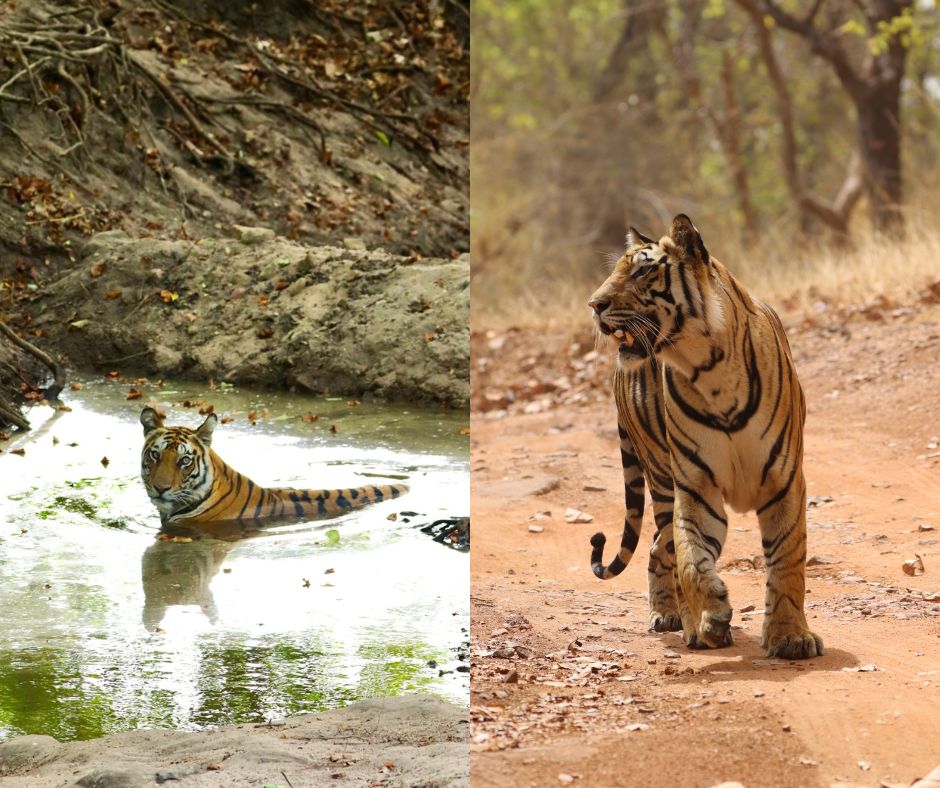
I left Bandhavgarh thinking I’d done it.
Ticked. Completed. Filed under successful wildlife trip.
The forest, clearly, was not done with me.
2023 — When the Forest Called Again
I returned in December 2023, convinced this was just another trip.
Another forest fix. In, out, back to life.
The forest disagreed.
Something shifted almost immediately. There was an odd familiarity—like meeting someone again and realising you’d left a conversation unfinished.
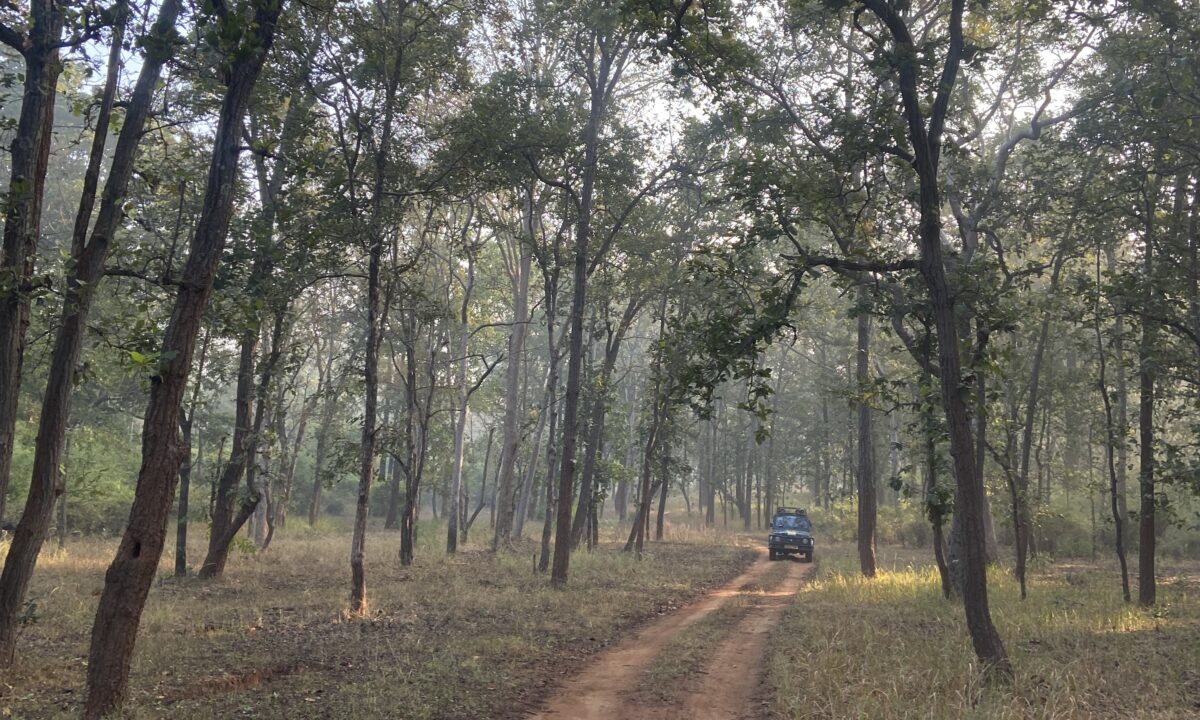
The safaris felt different this time.
Less frantic.
Less competitive.
I wasn’t counting sightings anymore. I was noticing things.
This was concerning.
I listened more.
I waited longer.
I stopped asking, “Where’s the tiger?” every five minutes.
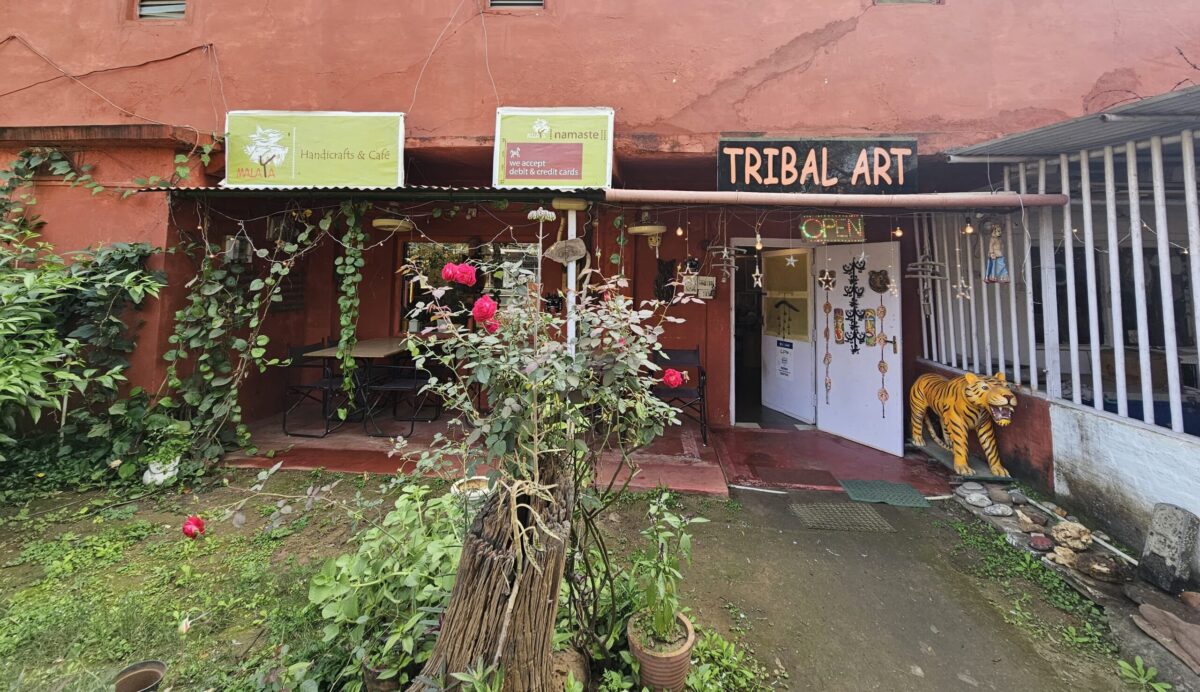
One afternoon, back from the forest, I wandered into a small, soulful store and café called Malaya Handicrafts & Café.
I thought I was stepping in for a coffee. I didn’t realise I was stepping into a turning point.
Malaya, Neelam, and a Quiet Recognition
Malaya didn’t feel like a shop. It felt like a pause.
Handcrafted pieces. Earthy textures. Objects carrying stories in their fibres. And behind it all—Neelam Varma.
There are people who try very hard to convince you of their purpose. And then there are people who don’t try at all—and somehow succeed.
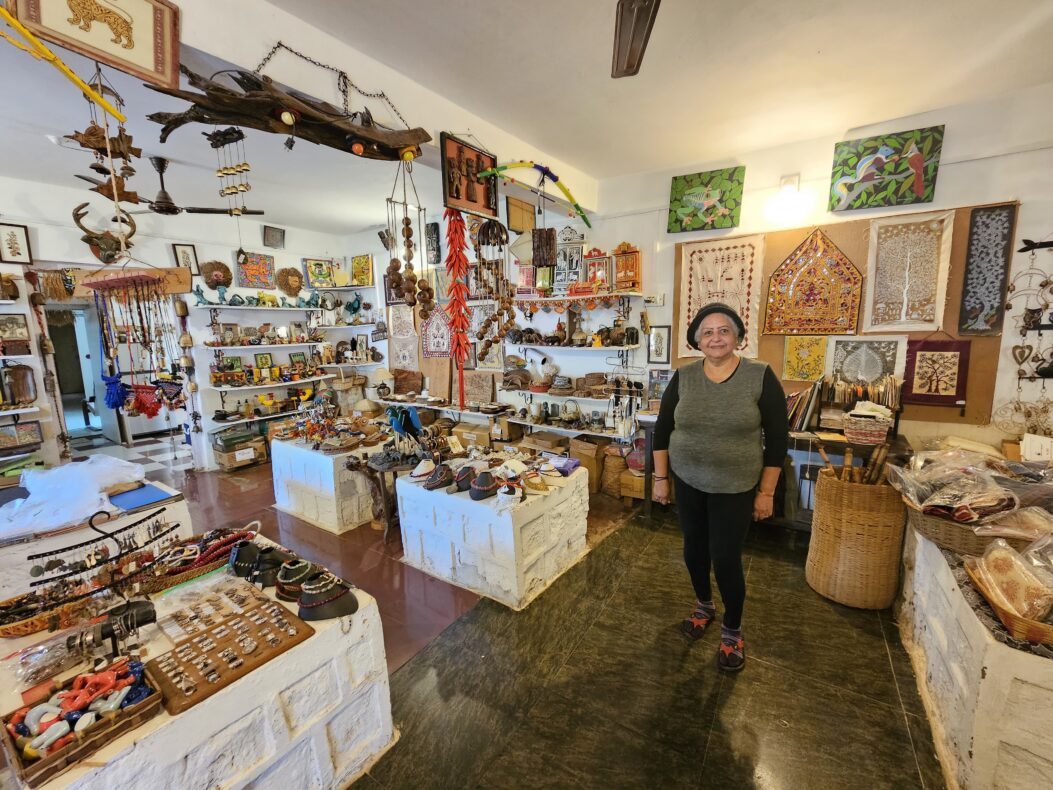
Neelam carried the forest in her presence—grounded, intuitive, unpretentious. No pitch. No hustle disguised as passion. Just a calm assurance that felt mildly unsettling.
A woman from Ahmedabad—my own native city—she arrived in Bandhavgarh in 2008, in her late forties, and simply stayed.
Over the years, she built Malaya by travelling across India, meeting tribal artisans, rural communities, and craft makers, personally curating everything the store holds. Sustainable. Handmade. Thoughtful. Entirely unbothered by trends.
Something in me recognised something in her. And in this place.
Half-joking—the safest way to say dangerous things— I wished I had a store like this someday.
Neelam smiled and, without drama, offered something extraordinary. She wanted to wander more and wondered—very casually—if I might one day take Malaya forward.
I didn’t decide anything then.
But the seed had been planted.
2024 — The Test
In the summer of 2024, I returned with a very sensible plan: stay ten days, experience Malaya.
I liked those ten days enough to return in autumn—with a plan to stay longer.
Weeks followed.
I slipped into the rhythm of forest life—the slower pace, the quiet joy of the store, the uncomfortable proximity to wildlife.
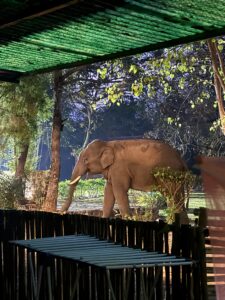
Elephants wandered into the backyard as if they’d misplaced something.
Tiger growls travelled through the night, reminding us who the landlord was.
I did not want to leave.
This should have alarmed me.
January 2025 — From Visitor to Resident
By January 2025, clarity arrived—quietly. I didn’t want to take over Malaya. I wanted to add to it. To become part of the legacy Neelam had built.
We became business partners—and, odd housemates, which is a separate adventure entirely. I put my Mumbai apartment on lease and packed up my city life.
This wasn’t escapism. This was a considered emotional relocation.
No ceremony. No announcement. Just a quiet shift in identity.
A Year of Weather, Witnessing, and Oaths
The year that followed was not romantic in the Instagram sense.
There were no dramatic montages—only heat, dust, power cuts, brutal summers, monsoon rebirths, and winter mornings sharp enough to make you question all life choices.
Add to that a shop displacement, renovations, background courtroom drama, logistical chaos, and the splitting of one beloved space into two—each carrying its own weight and uncertainty.
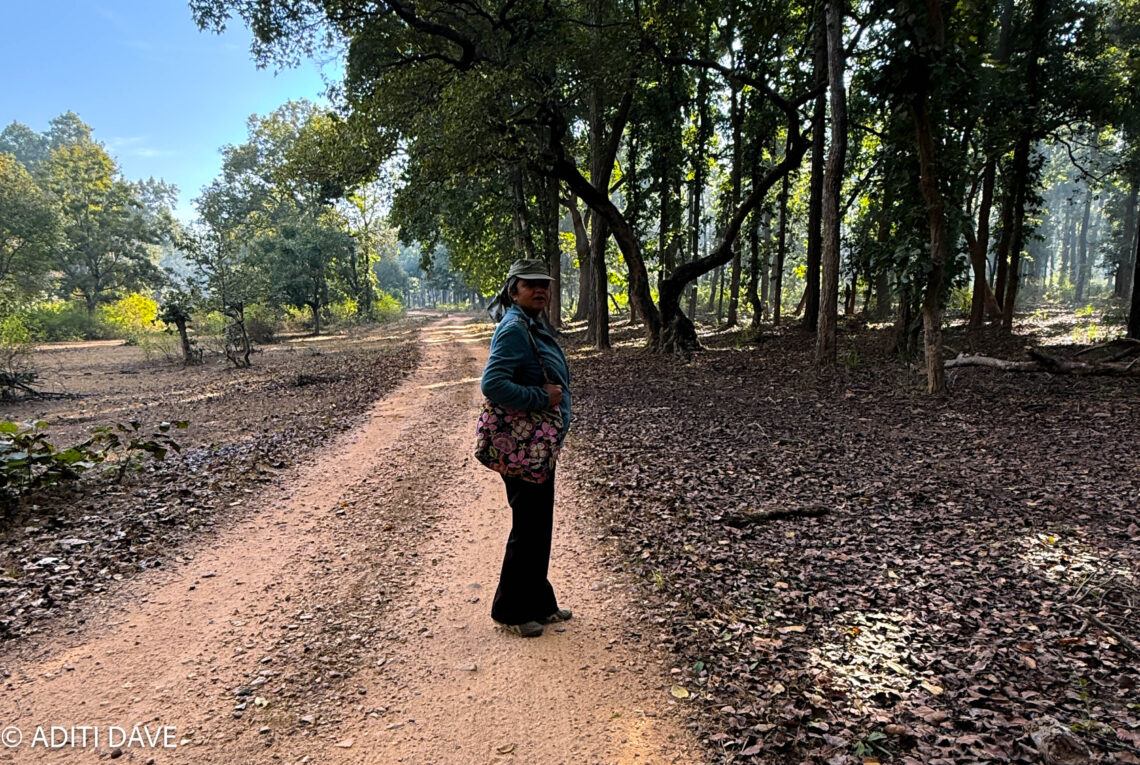
On the brighter side, I encountered wildlife beyond safaris, on roads outside the jungle, in backyards, and in moments that quietly remind you whose land this actually is. I became part of the forest’s rhythm—finding ways to connect beyond tourism: tiger estimation exercise, bird surveys, and yes, the occasional impromptu safari to see the beloved tiger.
Living here teaches things you don’t sign up for:
• Restraint
• Respect
• Boundaries
• Humility
Somewhere along the way, I crossed an oath—not announced, not documented, but deeply felt.
An oath to coexist.
To not exploit.
To not disturb.
To not chase.
I am no longer a tiger tourist. I am part of an ecosystem that belongs without entitlement.
Belonging Without Owning
Bandhavgarh did not give me answers. It gave me alignment. Which, inconveniently, lasts longer.
Somewhere along the way, I stopped running after moments and started living inside them. I stopped collecting experiences and began—almost accidentally—becoming one.
The forest didn’t change me overnight. It absorbed me gradually. Until one day, I realised I had stopped asking why I was here.
I was simply here. And perhaps that is the greatest gift Bandhavgarh offers—not sightings, not stories, not even certainty—but belonging without possession.
You May Also Like

Playing The Role of A Proud Party Pooper At Panna Tiger Reserve – The Emerald Forest
Not Always Lucky & Wise: A Tale of Inadvertently ‘Dodging’ Tiger Sightings in Dhikala Corbett